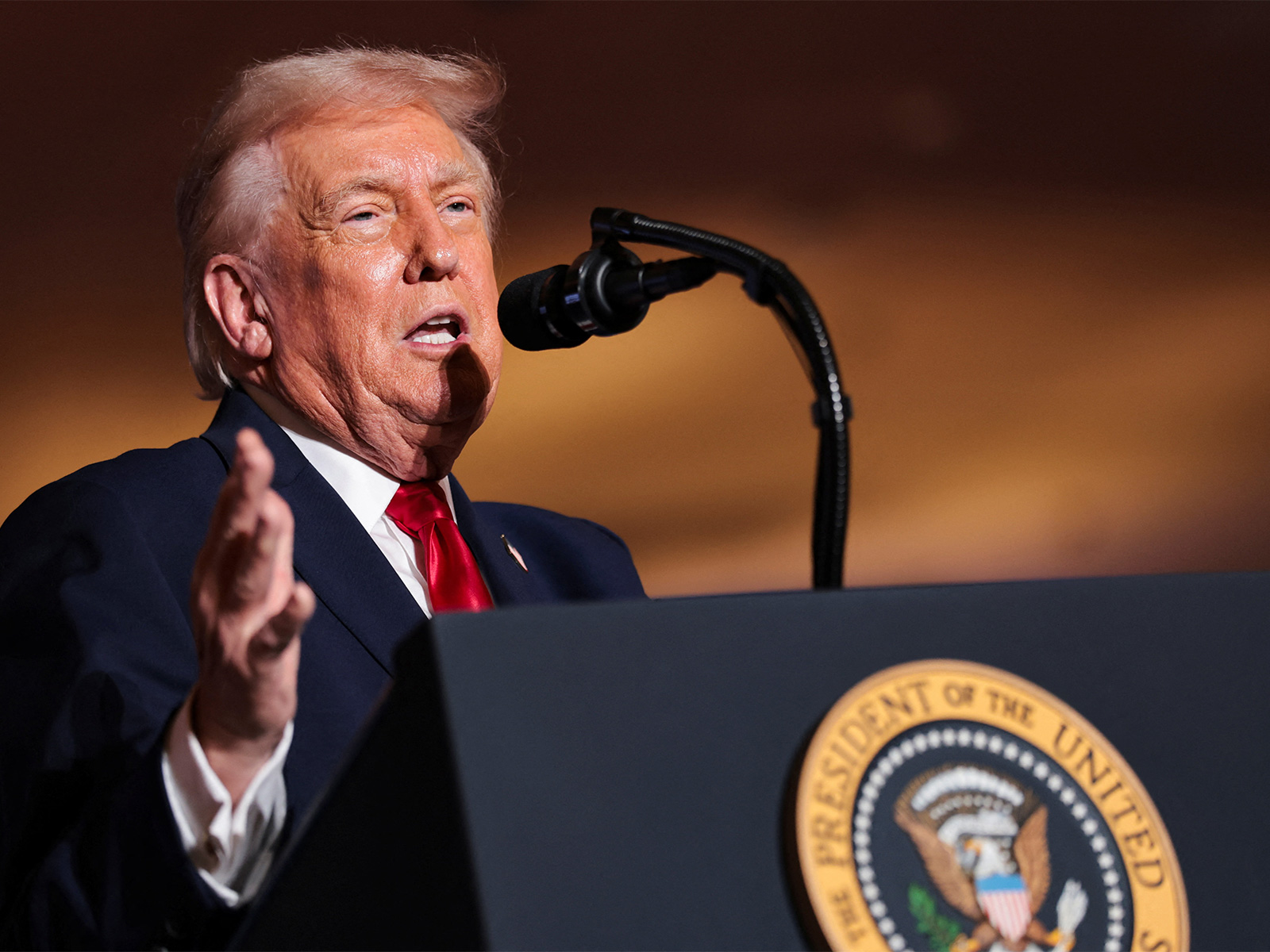
Mr. Trump admitted that he imposes tariffs based on his personal mood.
Feb 11, 2026
Washington [US], February 11: US President Donald Trump admitted that imposing tariffs on foreign imports was partly based on his personal feelings about foreign leaders.
This information was revealed by Mr. Trump in an interview with Fox News on February 10, as the US Supreme Court was preparing to rule on the president's authority to use emergency tariff powers.
The U.S. Supreme Court is considering whether President Trump has the right to invoke an "economic emergency" to impose tariffs on imported goods. Oral arguments on the case took place in November 2025, and the ruling is now awaited.
In the interview, Trump reiterated a story he had told at the World Economic Forum in Davos , Switzerland, in January, regarding the decision to increase import tariffs on Swiss goods. According to him, this decision stemmed from an "unpleasant" phone call with the then-Swiss leader.
"I had a problem with a very good country, Switzerland. I imposed a 30% tariff, a very low rate. and then I got an urgent call from the Swiss leader," Trump said.
According to Trump's account, Swiss President Keller-Sutter was "aggressive but polite" in emphasizing that Switzerland was a small country and unable to meet American demands. Trump said he responded by saying that the U.S. had a large trade deficit with Switzerland.
"I said that you may be a small country, but we have a $42 billion trade deficit with you," Trump recounted. However, The Guardian cites 2024 figures showing that the US goods trade deficit with Switzerland was $38.3 billion, while the US had a $29.7 billion services trade surplus with the country.
Mr. Trump said the initial proposed tariff rate was 30%, but it was raised to 39% because he "didn't like the way she spoke" during the phone call.
Meanwhile, the Trump administration is actively defending the legality of its use of emergency tariff powers. Speaking on Fox News on February 9, U.S. Treasury Secretary Scott Bessent warned that if the Supreme Court rules against President Trump's use of these powers, it would be a "huge loss" for the American people.
According to Bessent, President Trump has repeatedly invoked the International Emergency Economic Powers Act (IEEPA) in 2025 as a tool to pressure China and other countries into negotiating deals more favorable to the United States. He argues that stripping the president of emergency powers would significantly weaken America's position in the context of increasingly fierce geopolitical competition.
In Congress, US House Speaker Mike Johnson said he was pushing for a vote on the afternoon of February 10 to block legal challenges to President Trump's global tariff policy, despite strong opposition from a section of lawmakers within his own Republican party, according to The Hill .
Source: Thanh Nien Newspaper